There are moments in parenting that might seem incredibly small and impossible to deal with, where they could be as simple as a child who refuses to sleep or begins to show tantrums without any reason. A look of frustration that says, “I don’t know how to explain what I feel.” For Bette Saffran, these moments were not passing challenges; they were turning points.
As a mother to a child on the autism spectrum, Bette found herself searching for ways to support emotional understanding without fear, pressure, or punishment. What she discovered was simple but profound: children don’t always need answers; at times, all that they need are stories that reflect their inner world.
What began as a way to connect with her own child slowly became something bigger over time. She became the children’s author and illustrator of emotionally supportive stories that help children feel seen, safe, and understood. This is the heart of Bette Saffran’s journey, and the reason her stories resonate so deeply with families today.
A Journey Rooted in Real Life, Not Imagination Alone
Unlike other authors and illustrators, who begin writing for the love of publishing and other rewards. Bette Safrran didn’t write children’s SEL stories for the passion of storytelling alone. However, it’s about listening, observing, and responding to real life. For Bette Saffran, writing children’s books has never been separate from parenting, caregiving, or emotional learning. Her journey as a children’s author and illustrator is deep and evolved from her life experiences, especially her role as a grandmother to a neuro-divergent child.
She has an emotional attachment of writing SEL stories for children where she poured down warmth, patience, and purpose. Bette has carved out a meaningful space in children’s literature by writing that feels authentic, emotionally safe, and genuinely supportive.
A Journey Rooted in Real Life, Not Imagination Alone
Bette had a passion for connecting to the world of children’s imagination, where things, emotions, and experiences have meaning. As vast as the imagination of a child could go there experiences and ways to articulate them also differed. For Bette, it is time for parents, grandparents, children, and teachers to sit down and listen, observe, and respond to these shared experiences.
Her path as an author emerged naturally from everyday moments: bedtime struggles, emotional meltdowns, questions about fairness, rest, confidence, and belonging. These moments weren’t abstract ideas; they were lived experiences inside her own home.
As a parent to a 13-year-old child on the autism spectrum, Bette became deeply aware of how children process emotions differently. Traditional discipline methods and abstract explanations often fell short. What worked, however, were stories, gentle narratives that explained emotions without judgment and controlled through rules and regulations. This is where Bette’s dream of writing children’s books with purpose truly began.
Writing With an SEL Lens and a Parent’s Heart
Social-emotional learning is not only about a buzz that has taken the learning spectrum by storm. It’s a foundational course that matters the most in a child’s life. Her stories are built to help children identify feelings, understand consequences, and develop empathy in ways that feel safe rather than overwhelming.
Her approach to emotionally supportive stories for kids reflects what she practiced daily as a parent. Aspects like predictable patterns, calm resolutions, and gentle reinforcements are part of her creative structuring of all those short, simple, but reflective stories.
Moreover, the inclusion of these aspects also showcases her role as a parent and how introspective parents could be, as the principles followed in the book are especially important for neuro-divergent children, which is why Bette’s work is often described as ASD-friendly (and intentionally designed to be emotionally accessible for all children).
Turning Everyday Struggles Into Character-Building Stories for Kids
Challenges that may seem simple and familiar are the topics of Bette’s book. She carefully examines a child’s mind and explains their form of struggles in stories. For her, childhood challenges like a child who is unable to take a nap, refuses to rest, or is unable to comprehend diversity in the world are real topics of discussion for her stories.
However, these aren’t dramatic plot devices that she incorporates; these are reflections of childhood reality. In Big Lessons From a Tiny Steam Tug, a child’s resistance to rest becomes an opportunity to explore self-care, patience, and responsibility. The message is subtle but powerful: taking care of yourself allows you to help others.
This is a hallmark of Bette’s style, where she chooses character-building stories for kids that teach without preaching. And Children don’t just hear what to do; they see it modeled through characters who feel like them.
Stories That Support Emotional Growth At Home and Beyond
Parents often look for social-emotional learning books for kids with simpler concepts and backgrounds. That doesn’t overly preach to their young minds. Bette bridges that gap by creating stories that support emotional growth while strengthening the parent-child connection.
Her work extends beyond the page. Through her insights on parent-child communication, she reinforces that stories can be tools and not escapes for emotional development. When parents read her books aloud, they aren’t just sharing a story; they’re opening a conversation.
This connection is especially vital for families navigating emotional regulation, sensory sensitivity, or communication differences. Bette’s stories gently normalize those experiences.
Featured SEL Picture Books by Bette Saffran
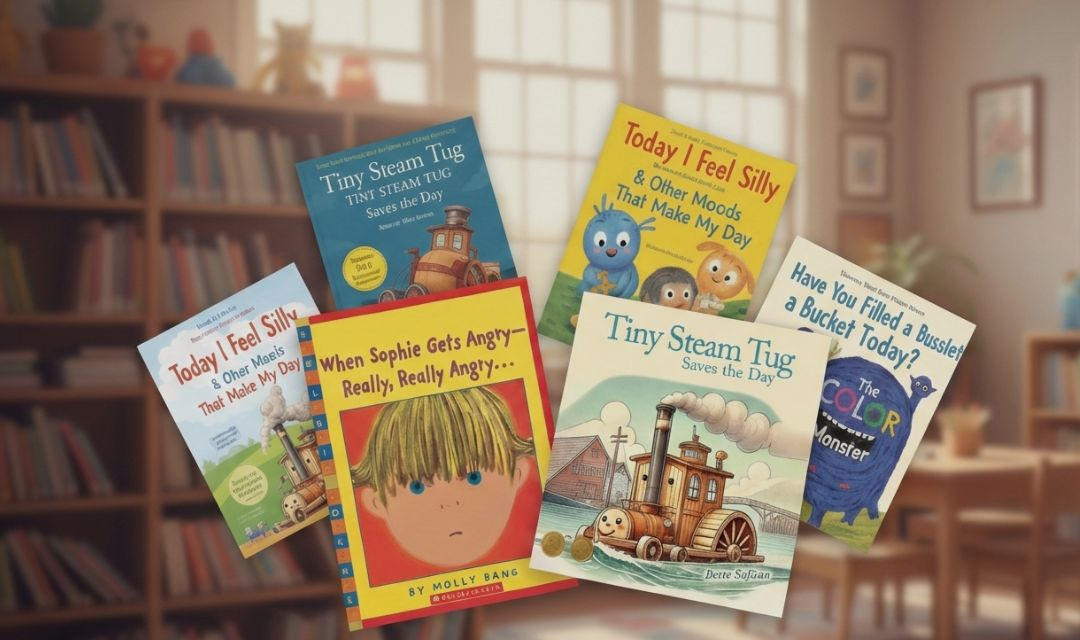
Below are two standout titles that exemplify how Bette transforms real experiences into meaningful SEL narratives:
1. Big Lessons From a Tiny Steam Tug
2. Tiny Steam Tug Saves the Day
What makes Bette’s books stand out?
One of the most distinctive features of Bette’s book is the aspect that she chooses to keep the narrative simple and ASD-friendly. Her stories avoid characters and events that could bring an overload of emotions, and also use repetition to reinforce the ideas. Thus, keeping it simple yet effective for learners who fall around the spectrum of neurodiversity.
children with anxiety, and highly sensitive readers, while remaining universally relatable for readers.
Conclusion
Bette Saffran’s journey shows that the best children’s books don’t come from distant imagination; they come from kitchens, bedtime routines, difficult days, and small breakthroughs. By transforming real experiences into compassionate narratives, she continues to create emotionally supportive stories for kids that help families grow together.
Her work reminds us that when stories are rooted in love, patience, and understanding, they become more than books; they become guides for emotional growth.